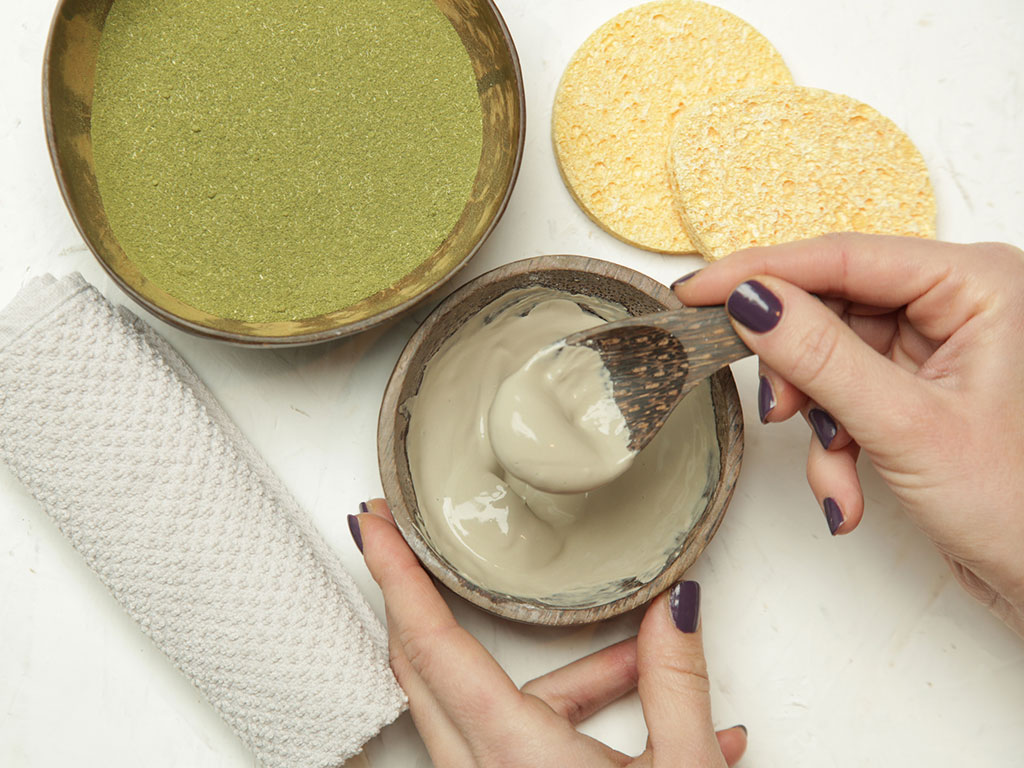
Clay is one of the most detoxifying substances on the earth. It has been used for centuries, with the first recorded use around 25ooBC. It was used as a preservative for making mummies and is also reported that Cleopatra used clay to preserve her complexion!
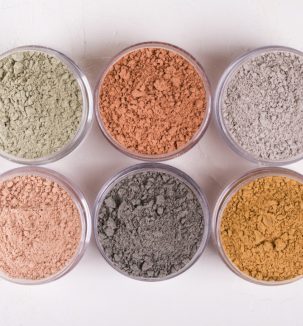
However, there are many kinds of clay available today and it can be quite overwhelming to know which one would be most suitable for you. In addition, not all clays on the market have the same purity as some so called “clays” are mined from quarry industrial rejects, hence their lower price and making their safety questionable.
The most potent and beneficial clays come from “noble soil layers”- the surface layers of very old soils usually located at the site of ancient volcanic activities and sea sedimentation basins. These clays are rich with minerals and trace elements. The Clay Cure have been very careful to find uncontaminated sources and supply only pure and high-grade clays.
So, what types of clay are there?
Here we’ll look at Montmorillonite Clay, Bentonite Clay, Kaolin Clay and Zeolite Clay.
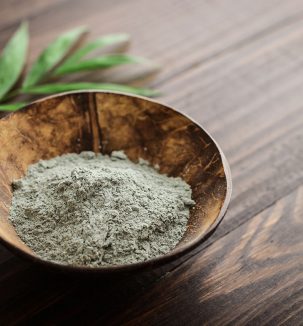
Montmorillonite Clay was named after its discovery locality, Montmorillon, France in the 1800’s. It is present in various parts of the world. It is usually green but can be red.
It is super absorbent; so absorbent that not only does it help to draw out impurities, excess oils and toxins but it also pulls blood towards the surface, giving your skin a tingling, tightening sensation and boosting circulation. Montmorillonite Clay is ideal for both skincare use and internal body detoxification.
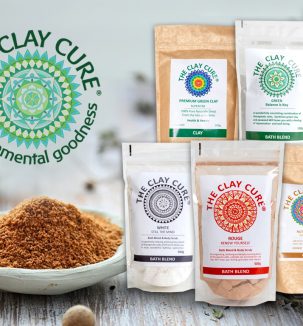
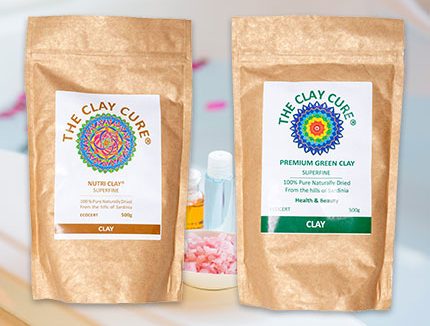
Green Clay from The Clay Cure Company is 100% Green Montmorillonite, it is suitable for oily skin, and acne prone skin. It is great to clear occasional skin blemishes, or use weekly as part of your facial skincare routine.
Bentonite Clay is NOT a separate mineral as some websites may lead you to believe. Bentonite Clay consists mostly of Montmorillonite. In addition to montmorillonite, it may contain crystalline quartz, cristobalite, and feldspar.
There are two types of Montmorillonite – also known as:
- Sodium Bentonite– often used for bathing and foot soaks
- Calcium Bentonite ideal for internal detoxification such as The Clay Cure Premium Nutri Clay– Superfine, which is 100% Superfine Montmorillonite (Calcium Bentonite) Beige Clay. This is a powerful yet gentle detoxifier, cleansing and drawing out toxins, whilst revitalising the digestive tract. It has an alkalinity of 8.5ph which can greatly reduce yeast and fungus that thrive in an acidic environment.
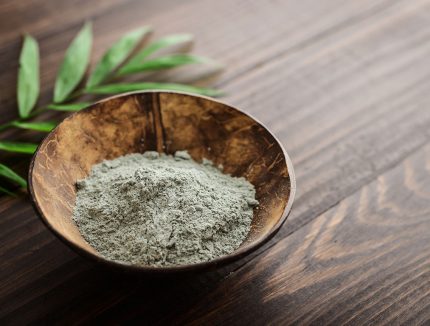
Kaolin Clay
Kaolin clay is often referred to as white clay or China clay, it is primarily made up of the mineral Kaolinite. The mineral in its purest form is a bright white colour. However, the clay often has a coloured tone depending on the mineral content of where it has been mined. Reddish hues, for example, are caused by higher levels of iron oxide deposits, while a green hue is due to decomposed plant matter. Kaolin has mild absorption capabilities. It is still absorbent, but less so than the other clays, making it gentle enough even for dry and sensitive skin.
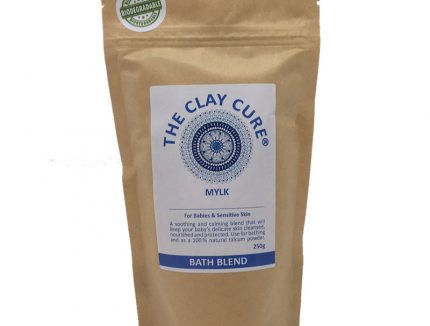
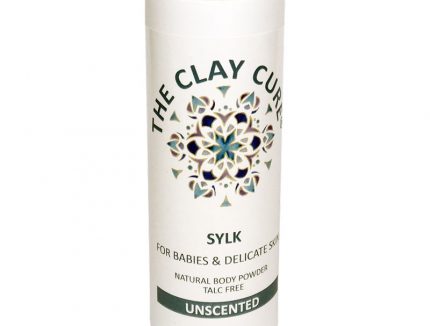
Examples include The Clay Cure MYLK Home Spa Bath Blend which is a soothing and calming blend of Kaolin white clay, Colloidal Oats, and Sodium Bicarbonate making it gentle enough for both you and your baby’s delicate skin, and The Clay Cure SYLK Unscented Baby and Body Powder, a gentle talc-free powder especially formulated to leave your skin smooth silky and fresh.
The Clay Cure Tooth powders contain Calcium Carbonate, Beige Montmorillonite clay and Kaolin clay, plus other wonderful ingredients. These tooth powders deeply nourish teeth and gums, read more to find out how.
Zeolite Clay
Zeolites are natural volcanic minerals. There are currently over 45 different naturally occurring zeolites, however it is only the natural mineral Clinoptilolite Zeolite that should be used for detoxification.
Examples include a food grade Clinoptilolite Zeolite by the Clay Cure Company. Studies have shown that Zeolite has a high affinity for trapping toxins, pollutants and heavy metals, such as lead, arsenic and mercury. As Zeolite is naturally very porous and negatively charged, it attracts positively charged ions into its large vacant spaces, or cages. It is pulled towards toxins like a magnet and sucks them up into its structure. It is then excreted through the body’s natural eliminatory channels safely and effectively.
Zeolite is also so much more.
- Due to the alkaline properties of Zeolite, the body’s alkalinity can be increased and pH levels can be properly regulated.
- It is a highly effective antioxidant due to its ability to neutralize free radicals.
- Due to its finely micronised particle size, Clinoptilolite Zeolite by the Clay Cure has high bio-availability, meaning, it is more readily absorbed by the cells.
If you are interested in using clay for an internal detox- here are some pointers:-
- Make sure that you are well hydrated both prior to starting your regime and during, so drink lots of water
- Take it slowly and make sure that you don’t exceed the recommended amount
- Do not take with other supplements or medication, leave at least 2 hours in between, as clay may bind to some medications and reduce their effectiveness
- If you have a serious health condition or are pregnant, speak to your doctor before starting on any detox. Do not take if you have iron absorption issues, high blood pressure or chronic constipation
- Research shows that most adults take 1 heaped teaspoon stirred in spring water, leave for an hour to activate the clay, then drink on an empty stomach, morning and night
- If you want to try a more gentle approach, put 1 level teaspoon of food grade clay in a glass with filtered water, stir with a non-metallic spoon and leave the mixture to sit overnight; allowing the sediment to settle. Simply drink the water from the top of the mixture the following morning.
- Whichever approach you prefer, take for a 3 week period, then have a break for a week before commencing again. Continue this process for 3 months.
There is so much to learn about clay, the information above is not exhaustive and not a substitute for medical advice, so please do your own research to find out more.